





Shattering Soft Monopolies: Why Diverse Suppliers Are the Best Defence Against Hidden Supply Chain Risk

Anmol Sharma
When organisations talk about supply chain risk, the conversation usually focuses on major suppliers. Procurement teams spend significant time assessing Tier 1 suppliers, reviewing financial stability, monitoring performance, and preparing contingency plans. On paper, everything can look secure.
When organisations talk about supply chain risk, the conversation usually focuses on major suppliers.
Procurement teams spend significant time assessing Tier 1 suppliers, reviewing financial stability, monitoring performance, and preparing contingency plans. On paper, everything can look secure.
Yet some of the most significant risks in modern supply chains are often found further down the chain, hidden within Tier 2 and Tier 3 supplier networks. For context, Tier 1 suppliers are the organisations you buy from directly, Tier 2 suppliers provide goods or services to your Tier 1 suppliers, and Tier 3 suppliers support the Tier 2 network further upstream. While many organisations have strong visibility into their Tier 1 suppliers, understanding what happens beyond that first layer can be much more challenging.
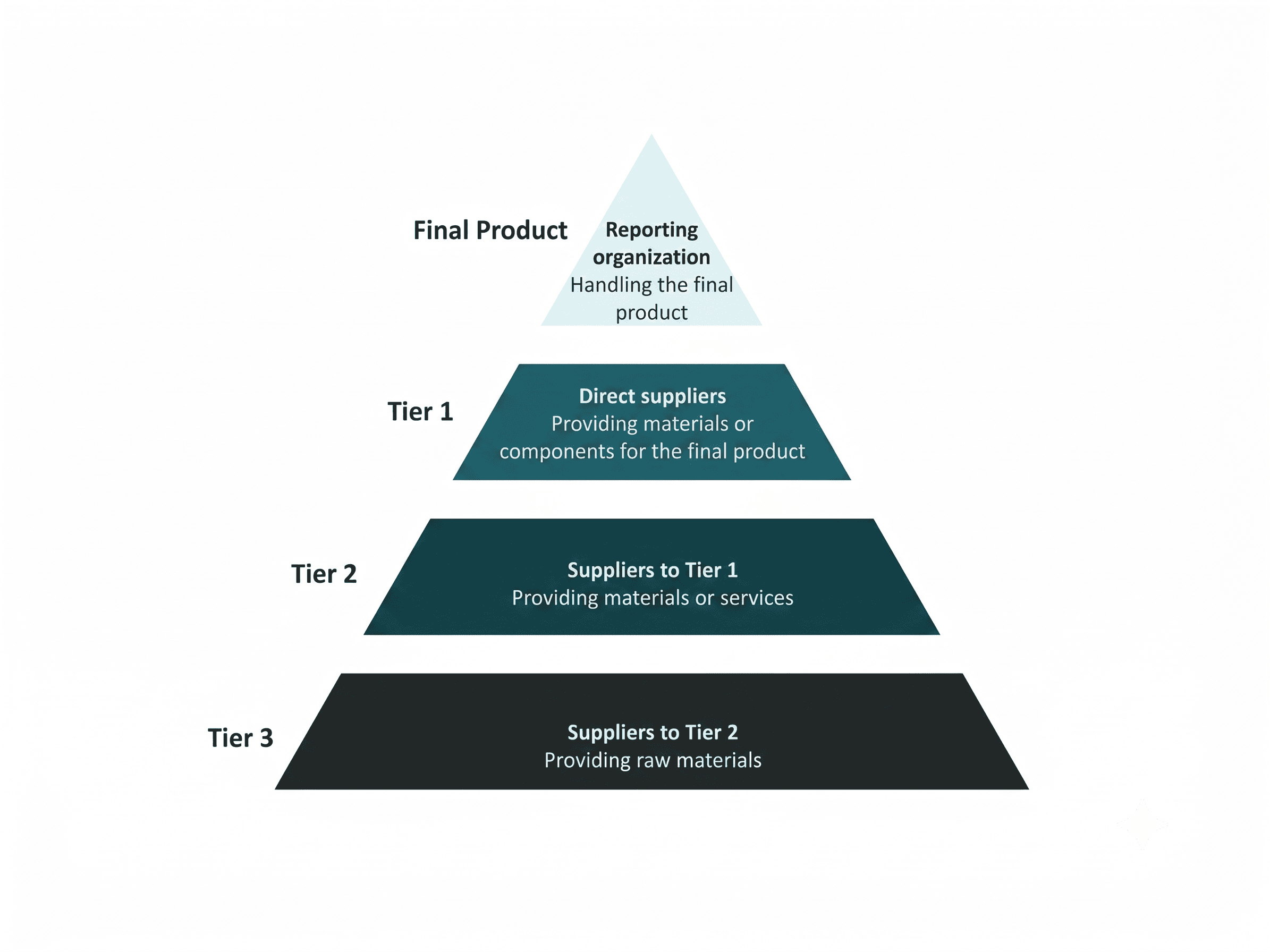
These risks are not always visible in traditional audits or supplier scorecards. They develop gradually over time and often go unnoticed until disruption occurs.
At GoDiverse, we refer to this as a quiet risk.
What does quiet risk actually look like in practice?
Imagine your organisation buys products from Supplier A, your Tier 1 supplier. Everything appears to be running smoothly. Orders arrive on time, performance metrics look strong, and risk assessments show no obvious concerns.
What you may not realise is that Supplier A relies heavily on Manufacturer B, a Tier 2 supplier, for a critical component. Manufacturer B has been supplying that component for 15 years, so nobody has questioned the arrangement.
Then one day, Manufacturer B experiences a major cyberattack. Production stops. Deliveries are delayed. Supplier A suddenly cannot fulfil its commitments.
From your perspective, the disruption seems to come out of nowhere. Your Tier 1 supplier looked healthy, but a hidden dependency further down the supply chain created a vulnerability that nobody had identified.
It often sits unnoticed until a disruption exposes just how concentrated a supply chain has become.
Quiet risk emerges when organisations become overly reliant on a small group of suppliers that have become deeply embedded within their supply chain. These suppliers may continue to perform well, but a lack of competition and alternative options can create vulnerabilities that only become apparent during times of disruption.
Understanding the Risk of Soft Monopolies
Soft monopolies are rarely intentional.
They develop when the same suppliers are repeatedly selected because they are familiar, trusted, and already integrated into existing operations.
Over time, procurement decisions become driven by convenience rather than competition.
A logistics provider, specialist manufacturer, or service provider may continue to win contracts year after year simply because they have always been part of the supply chain.
While this may appear efficient, it can create several challenges.
First, reduced competition can limit innovation. Without new suppliers entering the market, organisations may miss opportunities to benefit from new technologies, improved processes, or alternative approaches.
Second, concentration risk increases. If a heavily relied upon supplier experiences financial difficulties, cyber incidents, labour shortages, or operational disruption, the impact can quickly spread throughout the wider supply chain.
Finally, organisations may lose visibility into alternative suppliers that could strengthen resilience and create greater flexibility.
The risk remains hidden until something goes wrong.
Why Diverse Suppliers Strengthen Supply Chain Resilience
Supplier diversity is often discussed in the context of inclusion, social value, and ESG goals.
Those outcomes remain important.
However, there is another reason why organisations should invest in supplier diversity programmes: resilience.
Diverse suppliers frequently bring different perspectives, specialist expertise, innovative solutions, and greater flexibility to supply chains.
By broadening the range of suppliers involved in delivering goods and services, organisations can reduce their dependence on a limited number of incumbent providers.
This creates a healthier and more competitive supplier ecosystem.
When organisations introduce capable diverse suppliers into their supply chains, they create additional sourcing options, increase competition, and improve business continuity planning.
Supplier diversity therefore becomes more than a reporting exercise. It becomes a practical risk management strategy.
Competition Drives Better Outcomes
One of the most valuable benefits of a diverse supplier ecosystem is increased competition.
When organisations actively seek new suppliers, incumbent providers are encouraged to continue improving service levels, pricing, and innovation.
Competition helps prevent complacency.
It encourages suppliers to demonstrate value and continuously improve their offering.
For buyers, this can lead to better outcomes across cost, quality, service, and innovation.
Flexibility During Times of Disruption
Recent years have demonstrated how quickly supply chains can be disrupted by global events.
Whether caused by geopolitical tensions, extreme weather, transportation challenges, or changing market conditions, disruption is now a regular feature of the procurement landscape.
Smaller and medium-sized businesses often bring a level of agility that complements larger suppliers.
Many SMEs can adapt quickly, identify alternative sourcing options, and respond rapidly to changing customer requirements.
This flexibility can provide valuable support when organisations need alternative suppliers or additional capacity during periods of uncertainty.
Building Regional and Local Resilience
Another advantage of engaging diverse suppliers is geographic diversification.
Many supply chains remain heavily concentrated within specific regions or supplier clusters.
Introducing local and regional suppliers can help distribute risk and reduce reliance on a single geographic area.
If disruption affects one location, organisations may have access to alternative suppliers in other regions.
This contributes to a more balanced and resilient supply chain structure.
How Procurement Teams Can Take Action
Addressing quiet risk requires more than simply adding new suppliers to a database.
It requires a deliberate strategy.
Leading procurement teams are increasingly focusing on three key areas.
Increase Visibility Beyond Tier 1
Many organisations have a strong understanding of their direct suppliers but limited visibility beyond them.
Improving Tier 2 and Tier 3 supplier reporting can help identify concentration risks and uncover opportunities to engage a broader range of suppliers.
Create Opportunities for SMEs
Large contracts can unintentionally exclude smaller businesses.
Breaking contracts into smaller lots where appropriate can create opportunities for SMEs and diverse suppliers to participate while maintaining competition within the market.
Use Technology to Improve Supplier Discovery
Modern supplier discovery platforms, data enrichment tools, and AI-powered procurement solutions can help organisations identify, assess, and engage new suppliers more efficiently.
Technology is making it easier than ever to expand supplier networks while maintaining appropriate levels of due diligence and compliance.
Resilience and Diversity Go Hand in Hand
The most resilient supply chains are rarely the most concentrated.
They are the ones that balance efficiency with flexibility, scale with innovation, and stability with competition.
Supplier diversity should not be viewed solely as a social value initiative or compliance requirement.
It is also a practical business strategy that helps organisations reduce concentration risk, improve resilience, and strengthen long-term supply chain performance.
The organisations that succeed in the years ahead will be those that look beyond their established supplier relationships and build a broader, more diverse ecosystem of capable suppliers.
Because when disruption arrives, resilience is rarely found in a single supplier. It is found in the strength and diversity of the entire supply chain.